Fast Charger Safety: 65°C, the Critical Threshold for Performance and Safety
With the rapid advancement of fast charging technology, the safety performance of chargers, especially heat dissipation issues, has become a major concern for consumers and the industry. In this article, we delve into the temperature safety of fast chargers, focusing on the critical threshold of “65°C” to help ensure safer charging practices.
1.Infrared Thermal Imaging Test: GaN vs. Traditional Silicon-Based Chargers
The evolution of fast charging technology relies heavily on the development of new materials. As an emerging material, gallium nitride (GaN) stands out due to its excellent thermal conductivity and low resistance. We conducted thermal performance tests using an infrared thermal imager to compare GaN-based chargers with traditional silicon-based ones:
- GaN-based Chargers: When operating at 100W output, the core temperature remained at 58°C, while the average surface temperature stabilized around 45°C. Thanks to GaN’s superior thermal conductivity, heat is rapidly transferred to the outer casing, preventing localized overheating.
- Silicon-Based Chargers: Under the same 100W output conditions, the core temperature rose sharply to 72°C, with the surface temperature reaching 60°C. The weaker thermal conductivity of silicon leads to heat accumulation, increasing the risk of overheating.
2.Over-Temperature Protection Mechanism: Power Reduction Threshold and Charging Speed Curve
Fast charging safety also depends on the precision of the over-temperature protection mechanism. When the charger’s internal temperature reaches 65°C, most fast chargers activate a power reduction threshold, reducing the output power from 100W to approximately 65W. This mechanism affects the charging speed curve as follows:
- Normal Temperature Range (<65°C): The charger operates at full power, delivering peak charging speed. For example, a 4000mAh smartphone can charge from 0% to 80% in just 30 minutes.
- Power Reduction Range (≥65°C): Charging speed decreases significantly. Under the same conditions, the charging time extends to about 50 minutes. While the power reduction mechanism ensures safety, it also highlights the importance of using chargers in appropriate environments.
3.Dangerous Scenarios: Thermal Runaway Caused by Improper Use
Improper use of fast chargers can lead to dangerous thermal runaway scenarios. Here are two typical cases:
- Blanket Coverage: When a fast charger is placed under a blanket during charging, the surface temperature rises sharply from 30°C to 60°C within 10 minutes and breaks 80°C after 20 minutes. The low heat dissipation of blankets significantly increases the risk of overheating.
- Enclosed Spaces (e.g., luggage boxes): In enclosed environments, the charger’s heat dissipation efficiency drops dramatically. Tests showed that within 30 minutes, the temperature rose from 35°C to 75°C, far exceeding the safety threshold.
4.Differences in Global Safety Certification Standards: UL, IEC, and PSE
Different regions have varying safety certification standards for fast chargers. Understanding these differences helps consumers choose products that meet high safety standards:
- UL Certification (USA): Under normal operating conditions, the surface temperature of a charger must not exceed 75°C. For abnormal conditions (e.g., when covered by a blanket), the temperature limit increases to 90°C.
- IEC Certification (International Electrotechnical Commission): IEC standards are stricter, requiring the surface temperature of chargers to remain below 65°C in all usage scenarios. This ensures global safety consistency.
- PSE Certification (Japan): Similar to IEC standards, Japan’s PSE certification adds more extreme test conditions, such as high-humidity environment tests.
65°C is not only the performance threshold for fast chargers but also the balance point between safety and efficiency. Through infrared thermal imaging tests, over-temperature protection mechanism analysis, dangerous scenario simulations, and comparisons of global safety certifications, we gain a deeper understanding of the importance of thermal management in fast charging technology. Choosing a fast charger with efficient heat dissipation (e.g., GaN material) and strict safety certifications is key to ensuring charging safety. Remember, temperature safety always comes first when pursuing speed.
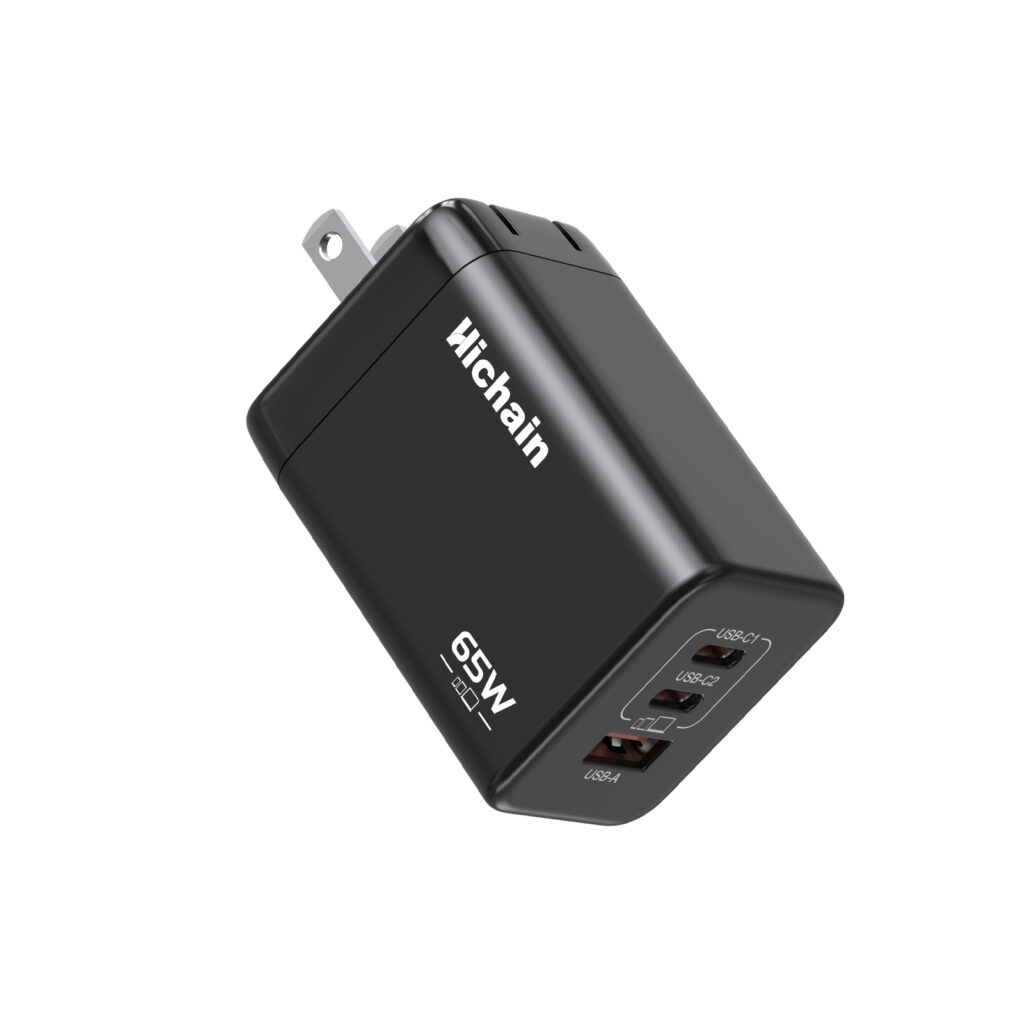
This is our product. Please click to view.